
English 
Tel:
+86-536-2096656
Email: info@kenonbio.com
Email: info@kenonbio.com
Address:
20th Floor, No. 101 Shenzhen Road, Laoshan District, Qingdao, China.
20th Floor, No. 101 Shenzhen Road, Laoshan District, Qingdao, China.


Views: 0 Author: Site Editor Publish Time: 2026-10-22 Origin: Site


Formulators and procurement teams evaluating a Monolaurin Feed Additive often face inconsistent terminology across supplier data sheets. Confusing concentration claims make it difficult to compare commercial products fairly. Industry standardization for esterified fatty acids remains inconsistent today. Buying based solely on price per kilogram carries significant risk. Relying strictly on total active ingredients causes dangerous underdosing. This ultimately leads to variable clinical outcomes in livestock.
Missing the fine print means you might purchase a product lacking actual antimicrobial efficacy. This guide breaks down how to objectively evaluate a specification sheet from any supplier. You will learn how to separate marketing claims from hard chemical realities quickly. Ultimately, we will help you select a formula delivering a predictable return on your nutrition investment.
Isomer ratio matters most: Total "Glycerol monolaurate" is less important than the specific concentration of Alpha-monolaurin (the highly active isomer).
Free lauric acid is a red flag: High levels of unreacted lauric acid in the spec indicate poor manufacturing and can negatively impact feed palatability.
Carrier selection impacts mill efficiency: The physical specification (flowability, moisture, carrier type) dictates whether the additive will survive high-temperature pelleting and distribute uniformly.
Verification requires specific assays: Rely on High-Performance Liquid Chromatography (HPLC) data over basic titration when comparing Certificates of Analysis (CoAs).
Procurement teams often fall into a very common financial trap. They treat all Gut health feed solutions as standard commodities. This approach carries hidden risks for your milling operations. Buying based on the lowest price per ton seems smart initially. However, cheaper additives often use low-quality carriers. They might also feature incomplete chemical esterification. Consequently, you must use higher inclusion rates to achieve clinical results. This reality cancels out any upfront cost savings immediately.
Defining a good specification is crucial for feed manufacturers. A reliable spec sheet guarantees consistent antimicrobial pressure in the gut. It ensures minimal handling issues inside the feed mill. Furthermore, it delivers predictable growth performance metrics. You want to see better results in poultry, swine, or aquaculture. Every line item on a data sheet should serve a distinct purpose.
You must connect specific technical features directly to business outcomes. Consider a specification guaranteeing greater than 45% alpha-monolaurin. This indicates exceptionally high product potency. High potency directly correlates to reduced mortality rates on the farm. It also helps optimize feed conversion ratios significantly. When you buy a precise chemical profile, you buy predictable performance.
Understanding the chemistry of efficacy separates good formulators from great ones. You must clarify the difference between specific molecular isomers. Alpha-monolaurin features a lauric acid chain attached at the 1-position of the glycerol backbone. This specific molecular structure provides powerful antibacterial properties. Conversely, beta-monolaurin attaches at the 2-position. Beta-isomers demonstrate significantly weaker antimicrobial activity. Animals digest them differently. Therefore, you need high alpha levels for true gut health.
Many manufacturers use clever tactics to manipulate their specification sheets. They might bundle mono-, di-, and triglycerides together. They present this confusing mixture under the broad umbrella term Glycerol monolaurate. This trick artificially inflates the active percentage on the data sheet. A product might claim 90% total esters. However, it could contain only 30% actual alpha-monolaurin. You end up paying for inactive fillers.
A rigorous specification uses strict evaluation standards. It should explicitly state the guaranteed minimum percentage of alpha-monolaurin. Never accept a blanket total ester content guarantee. You need a legally binding commitment to the active isomer.
Testing methodologies also require close scrutiny. Require your suppliers to disclose their analytical methods clearly. Basic titration often overestimates purity levels. Gas Chromatography (GC) can sometimes alter the molecule during testing. We recommend relying heavily on High-Performance Liquid Chromatography (HPLC). HPLC data ensures transparent assumptions about actual purity. It separates the alpha and beta isomers accurately.
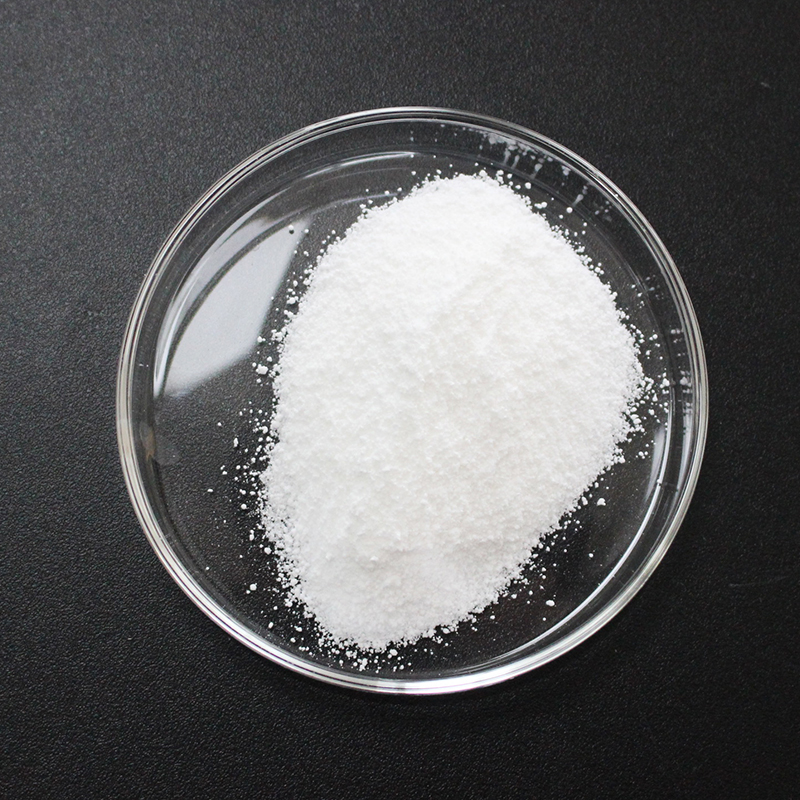
Physical form analysis matters just as much as chemical purity. You must evaluate the appearance and particle size lines carefully. These physical traits dictate daily mill efficiency. Carriers make up a significant portion of commercial additives.
Compare carrier types when evaluating any Feed grade monolaurin. Suppliers typically use two main carrier matrices. Silica-based carriers offer exceptionally high flowability. They work perfectly for highly concentrated premixes. Alternatively, vegetable fat matrices provide entirely different benefits. Fat encapsulation allows for targeted intestinal release inside the animal. It also significantly minimizes dangerous dust in the mill.
Carrier Characteristic | Silica-Based Matrix | Vegetable Fat Matrix |
|---|---|---|
Flowability | Exceptionally high, rarely cakes | Moderate, requires strict temperature control |
Dust Potential | Higher risk, requires proper ventilation | Very low risk, binds easily to other particles |
Intestinal Release | Immediate release in the upper tract | Slower release, reaches the lower intestine |
Best Application | Concentrated premixes and basemixes | Direct inclusion in finished pelleted feed |
Assess implementation realities for your specific feed mill environment. Look closely at moisture content and melting point specifications. High moisture increases the risk of caking in storage silos. A low melting point indicates potential degradation during manufacturing. High heat and extreme friction define the standard pelleting process. Your chosen additive must survive conditions routinely exceeding 90°C.
Homogeneity remains a top priority for feed nutritionists. Specific gravity and particle size distribution directly impact mixing uniformity. You want a very low Coefficient of Variation (CV). Consistent distribution ensures every single animal receives the correct dose. Poor flowability causes dangerous nutrient segregation. If the additive separates, some birds or pigs get nothing. Others might receive an accidental overdose.
Impurities ruin otherwise excellent feed formulations. Pay extremely close attention to unreacted fatty acids. Highlight the free lauric acid parameter on any data sheet. Poor manufacturing processes leave too much unreacted acid behind. High levels cause intensely pungent odors. This soapy smell depresses feed intake severely. Sensitive species like weaning piglets will simply refuse to eat.
Heavy metals and dioxins require strict baseline criteria. You must establish maximum limits for dangerous environmental contaminants. Ensure these limits align perfectly with local regulatory bodies. For example, cross-reference FDA Title 21 / eCFR Part 573 standards. These specific regulations govern food additive safety rigorously.
Watch for these standard heavy metal red flags on any CoA:
Lead (Pb) concentrations exceeding 2 ppm.
Arsenic (As) concentrations exceeding 2 ppm.
Cadmium (Cd) concentrations exceeding 1 ppm.
Mercury (Hg) concentrations exceeding 0.1 ppm.
Free glycerol limits also tell a story about manufacturing quality. Excessive free glycerol indicates incomplete chemical synthesis. Free glycerol acts as a highly hygroscopic agent. It pulls moisture from the air continuously. This leads directly to severe product clumping. It can also cause premature spoilage over time.
Quality assurance certifications act as your primary defense. Treat ISO, GMP+, or FAMI-QS certifications as non-negotiable prerequisites. These established frameworks guarantee the facility follows strict safety protocols. A technical data sheet without basic QA backing holds zero weight.
You need a systematic approach to shortlist potential suppliers. Start by demanding a strict apples-to-apples comparison. Never normalize price by simply looking at the cost per ton. Instead, calculate the true cost per percent of confirmed alpha-monolaurin. A cheaper product with low active isomers costs more per active unit. Do the financial math carefully.
Request the right documentation early in the purchasing process. Move beyond shiny marketing brochures immediately. Ask for a recent, batch-specific Certificate of Analysis (CoA). Demand a comprehensive Safety Data Sheet (SDS). Request at least 12 months of stability and shelf-life testing data. Reputable suppliers provide these crucial documents willingly.
Learn to identify and avoid common supplier red flags quickly. Reject suppliers refusing to provide historical batch-to-batch variance data. You need absolute consistency across multiple deliveries. Avoid companies using vague terms like proprietary ester blend. If they refuse to outline the exact chemical breakdown, walk away. Transparency builds long-term trust in animal nutrition.
Define clear next-step actions for your chosen candidates. Initiate a pilot feed-mill run first. This tests actual mixing behavior and pelleting survivability safely. Next, design an in-vivo feeding trial. Use a strict control group for comparison. Validate the implied efficacy written on the spec sheet. Real-world performance always supersedes paper claims.
A specification sheet serves as a scientific contract of performance. It is much more than a simple list of ingredients. By evaluating data sheets accurately, you eliminate expensive guesswork.
Keep these final points in mind during your next review:
Focusing on pure alpha-monolaurin guarantees reliable antimicrobial action.
Strict impurity limits protect your valuable feed palatability.
Physical stability metrics ensure smooth, uninterrupted mill operations.
Nutritionists must protect both their mill efficiency and livestock health investments. A rigorous auditing process achieves this dual goal easily. We strongly encourage you to audit your current supplier today. Pull their latest specification sheet from your files. Compare their guaranteed parameters against the strict criteria outlined above. Demand better documentation if their numbers look vague. Your livestock deserve high-quality nutrition, and your business deserves predictable results.
A: Commercial products usually range from 30% to 90% concentration depending on the carrier. However, the critical metric is the isomer breakdown. The declared active portion should be predominantly alpha-monolaurin. A high-quality additive should guarantee at least 40-50% actual alpha-monolaurin to ensure a strong, cost-effective antimicrobial effect in the gut.
A: High-quality esterified monolaurin is exceptionally heat-stable. It routinely survives standard feed mill conditioning temperatures up to 120°C. This makes it significantly more resilient during rigorous pelleting than volatile free fatty acids. Always check the melting point on the specification sheet to confirm the specific carrier matrix can withstand your mill's thermal load.
A: Free lauric acid carries intense negative sensory attributes. It possesses a harsh, soapy taste and a pungent odor. High levels of unreacted acid severely depress feed intake, particularly in sensitive young animals like weaning piglets. Premium specifications guarantee very low levels of unreacted free fatty acids to maintain excellent feed palatability.
A: Monolaurin should not act as a direct 1:1 replacement. Instead, it works best in synergy with standard organic acids. Organic acids lower the environmental pH. This allows the monolaurin molecules to penetrate bacterial cell walls much more effectively. Use them together to create a comprehensive, highly effective gut health strategy.


